
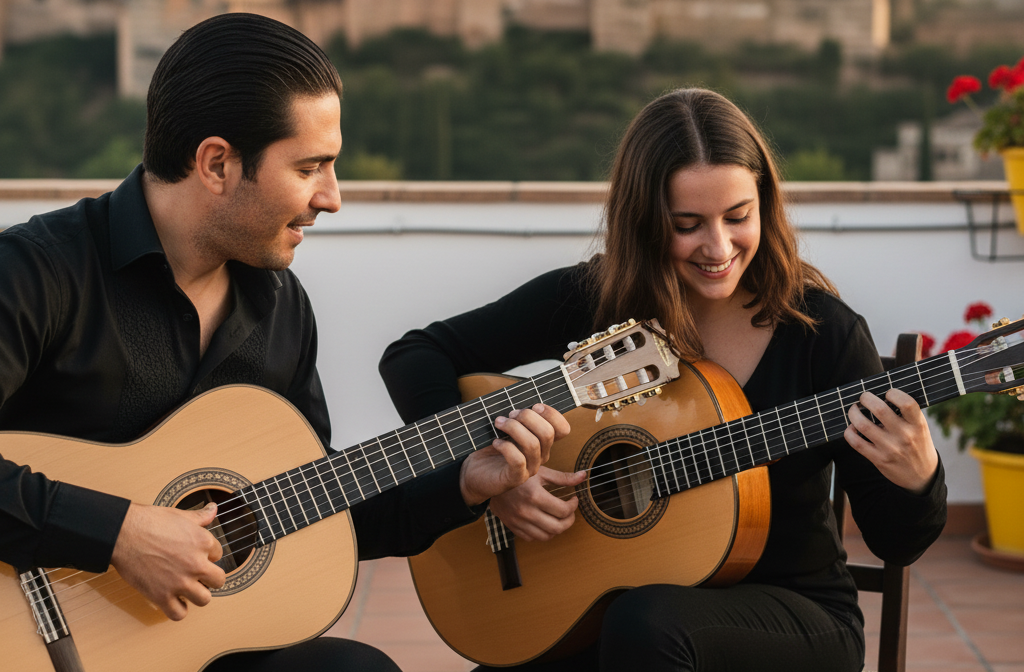
Flamenco is not just a musical genre; it is the backbone of Spanish cultural identity and one of the few arts in the world declared an Intangible Cultural Heritage of Humanity by UNESCO. In 2026, flamenco is experiencing a "digital golden age," where the traditional tablaos of Seville, Jerez, and Granada coexist with electronic experimentation and a global audience that consumes this art through high-definition and augmented reality platforms.
In this comprehensive guide, we'll explore everything from the deepest roots of flamenco song to the trends revolutionizing flamenco dance this year. If you're looking to understand flamenco's soul, find out where to see the best shows, or get started with flamenco guitar, this is your ultimate resource.
1. What is Flamenco? Definition and Essence
Flamenco is a three-dimensional art form that combines singing (voice), guitar playing, and dancing. Although often associated only with celebration, its essence lies in the expression of the most extreme human emotions: pain, joy, tragedy, fear, and hope.
The concept of the "Goblin" in 2026
Federico García Lorca defined it as a "mysterious power that everyone feels and that no philosopher can explain." Today, duende remains that ephemeral moment of mystical connection between the artist and the audience. It cannot be manufactured with technology; it is the pure authenticity that makes flamenco unique compared to processed music.
2. The Three Pillars of Flamenco
A. Flamenco Singing: The Voice of the Earth
Singing is the heart of flamenco. Without singing, there is no flamenco. It is divided into categories according to its intensity and origin:
- Cante Jondo: The deepest and most dramatic (Seguiriya, Soleá, Tonás).
- Festive Songs: For the celebration (Bulería, Alegría, Tangos).
- Cantes de Ida y Vuelta: Influenced by Latin American music (Guajira, Colombian).
B. The Touch: The Evolution of the Flamenco Guitar
In 2026, the flamenco guitar has reached unprecedented technical levels. Since Paco de Lucía's revolution, the instrument has gone from being a mere accompaniment to flamenco singing to a solo instrument that fills stadiums. Luthier-made guitars are now coveted objects that can exceed €15,000.
C. Flamenco Dance: Geometry and Passion
Dance is the visual expression of rhythm (beat). In 2026, we see a duality: tablao dance, based on improvisation and spontaneity, and stage dance, which incorporates elements of contemporary dance and classical ballet.
3. History and Origins: The Melting Pot of Cultures
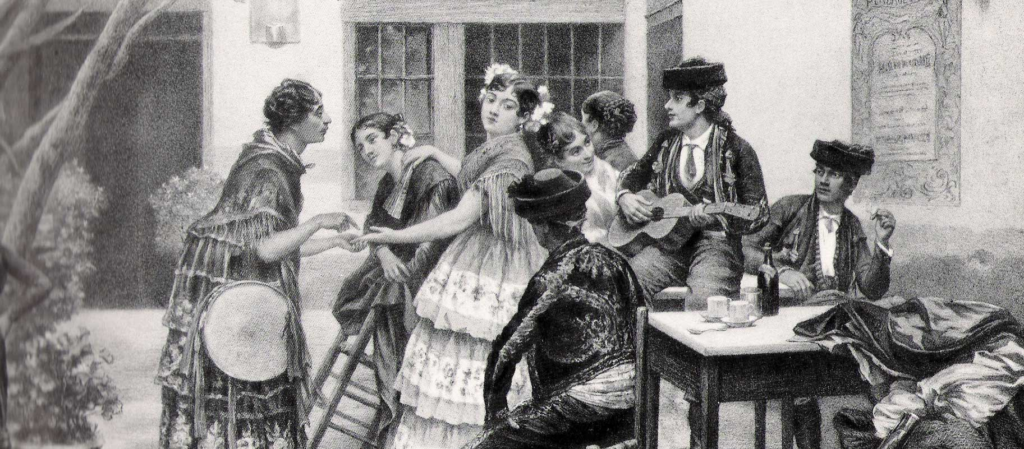
Flamenco originated in Lower Andalusia (Seville, Cadiz, Jerez) around the 18th century. It is the result of a unique cultural fusion:
- Gypsy Influence: They contributed rhythm, temperament, and interpretive strength.
- Arabic Influence: Visible in the melismas of the voice and the modal harmonies.
- Jewish Influence: Present in the lament songs.
- Andalusian Popular Influence: The basis of rural and peasant folklore.
4. Structure of the Compass: The Mathematics of Feeling
To a beginner, the rhythm of flamenco may seem chaotic, but it is strictly mathematical. The rhythms are grouped into Palos.
The most important Palos in 2026:
- La Soleá: The mother of all flamenco songs. A 12-beat rhythm with a solemn feel.
- La Bulería: The most flexible and festive style. It is the final exam for every flamenco artist.
- La Seguiriya: The most tragic and ancient song, with a complex rhythm that is difficult to master.
- Las Alegrías: The brilliance of Cádiz. A fast and luminous rhythm that evokes the sea.
5. Where to Experience Flamenco: The Best Tablaos and Festivals in 2026
If you're traveling to Spain this year, the options are endless. We're here to help you choose.
The Best Flamenco Tablaos (Intimate Experience)
- Seville: The Andalusian Palace and Los Gallos. Seville remains the world capital where dance reaches its highest elegance.
- Madrid: El Corral de la Morería (with a Michelin star) and Cardamomo. Madrid is where artists make their name.
- Granada: The caves of Sacromonte. A natural environment carved into the rock where flamenco feels at home in its most primal state.
Flamenco Festivals You Can't Miss
- The Seville Flamenco Biennial: The most important event in the world (held every two years).
- The Jerez Festival: Specializing in dance and learning.
- Cante de las Minas (La Unión): The most prestigious competition for novice flamenco singers.
6. The Flamenco Revolution in the Digital Age
In 2026, technology has transformed how we learn and consume flamenco.
Online Education and Masterclasses
Platforms like Flamenco Academy allow a student in Japan or the United States to learn to play guitar with masters from Jerez in real time. Augmented Reality (AR) is now being used to correct the dancer's posture, using sensors to show whether the angle of the heelwork is correct.
Flamenco in the Metaverse
The first "Virtual Tablaos" have appeared. Users, through their avatars, can attend a flamenco party in a virtual cave in Granada, interacting with other fans from all over the world.
7. The Key Figures of Modern Flamenco
We cannot talk about flamenco in 2026 without mentioning those who are breaking the mold:
- Rosalía: Although her music is pop-urban, her flamenco foundation has globalized the aesthetics and rhythms of the genre.
- Israel Galván: The revolutionary of contemporary dance.
- Estrella Morente: Heir to a sacred lineage that keeps classic flamenco singing alive.
- Vicente Amigo: The greatest living exponent of the lyrical guitar.
8. Instruments and Accessories: The Artist's Equipment
If you decide to get started in this art, you need to know the tools:
The Flamenco Guitar of 2026
Unlike classical guitars, flamenco guitars use woods such as cypress (for a brighter, more percussive sound) and have a lower action (string height) to facilitate the "lisping" sound.
Dance Shoes
Professional flamenco dance shoes have hundreds of nails in the toe and heel, polished with millimeter precision to ensure a clear and powerful sound. Brands like Gallardo and Begoña Cervera are the gold standard.
The Flamenco Cajon
Introduced by Paco de Lucía from Peru in the 1970s, it is now indispensable. In 2026, there are electronic cajons that allow you to trigger samples without losing the organic feel of the wood.
10. The Economic Impact of Flamenco in Spain
Flamenco is an industry that generates billions of euros annually.
- Cultural Tourism: More than 20% of tourists who visit Andalusia are attracted by flamenco.
- Fashion Export: The flamenco dress (which we saw in the previous guide) and dance accessories are massively exported to markets like Japan, where there are more flamenco academies than in Spain itself.
11. Ethics and Preservation: The Cultural Appropriation Debate
In 2026, the debate about who can and cannot perform flamenco is still ongoing. However, the flamenco community is becoming increasingly open. Flamenco is understood to be a universal language. As long as the rhythm and its roots are respected, flamenco embraces any artist, regardless of their origin.
12. Guide for the Novice Spectator: How to Enjoy Your First Show
If it's your first time at a flamenco show, follow these tips:
- Absolute Silence: Flamenco requires active listening. Do not speak during the singing.
- The Jaleo: You can cheer ("¡Olé!", "¡Arsa!", "¡Toma que toma!") to encourage the artist, but do it during silences or endings, never interrupting a phrase of the song.
- Observe the Feet and Hands: Notice the coordination. Flamenco dancing is a constant dialogue between the dancer and the guitarist.
13. Conclusion: The Future of Flamenco
Flamenco in 2026 is an art form that has aged gracefully without losing its youthful spirit. It is resilient, adaptable, and profoundly human. As long as the need to express pain and glory exists, flamenco will continue to resonate on stages around the world.
This art is not a museum piece; it is a living organism that breathes through every tap of the heels, every strum of the guitar, and every wail from the throat of a flamenco singer.
Flamenco is more alive than ever, evolving without forgetting its roots. To understand how we've reached this explosion of contemporary creativity, it's essential to look back and explore our section on the History of Flamenco: Origin and Evolution, the story of an art form that became a World Heritage Site.
No responses yet