
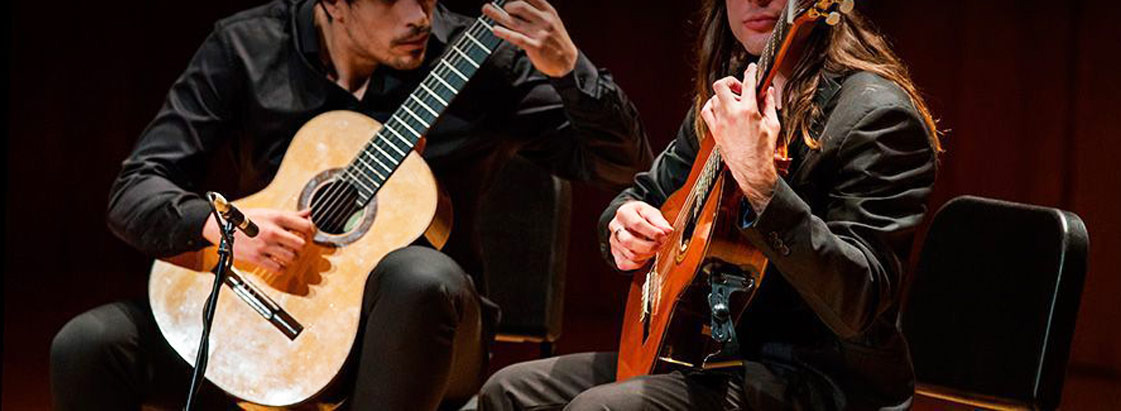
Flamenco festivals are the beating heart of this ancient art form. Every year, from small Andalusian villages to large capital cities, Spain is filled with events that celebrate singing, dancing, and guitar playing in all its forms. These festivals are not just shows for tourists; they are gatherings where fans, artists, and experts come together to celebrate, discuss, and keep the flame of flamenco alive.
In this comprehensive guide to flamenco festivals in 2026, you will discover the must-see events on the Spanish flamenco calendar, from the most prestigious and long-standing to the most innovative and experimental. We will tell you when they take place, what makes them special, how to get tickets, where to stay, and what to expect from each one.
Why attend flamenco festivals
Before diving into the calendar, let's talk about why festivals are a unique experience that no flamenco lover should miss.
The authenticity of live performances
Recorded flamenco is wonderful, but live flamenco has a completely different dimension. The energy generated between artist and audience, the improvisation of the moment, the magic that appears when you least expect it—all this only happens live.
At festivals, especially the more traditional ones, you can experience flamenco as a communal art form. You are not a passive spectator; you are part of a collective ritual where the audience cheers, applauds, and responds. This interaction fuels the artists, who in turn elevate their performance.
Discover new artists
Festivals feature everything from established stars to emerging talents. You can see Vicente Amigo on a big stage and then discover a young, unknown singer in a small club who will take your breath away. Many of today's big names in flamenco were discovered by audiences at festivals when they were still novices.
Complete cultural immersion
Flamenco festivals, especially in small towns in Andalusia, immerse you in the culture that gave birth to flamenco. It's not just the show on stage; it's the atmosphere in the streets, the conversations in the bars, the people who live and breathe flamenco. It's seeing grandparents explaining the subtleties of a siguiriya to their grandchildren, or coming across a spontaneous party at three in the morning in a square.
Getting to know the flamenco community
The festivals attract fans from all over the world. You will meet everyone from Japanese fans who travel annually so as not to miss a single concert, to third-generation gypsies who have flamenco in their blood. The conversations, the passionate debates about who sings a particular style best, the recommendations for concerts or artists—all of this greatly enriches your understanding and appreciation of flamenco.
Unique geographical and architectural context
Many festivals are held in historic venues: centuries-old Andalusian courtyards, Roman theaters, medieval castles, sherry cellars. The setting is not just decoration; it is an integral part of the experience. Listening to cante jondo in a Cordoba courtyard under the stars, surrounded by the scent of jasmine, is like nothing else.
The flamenco calendar: essential festivals month by month
January–February: The awakening of the flamenco year
Jerez Flamenco Festival (late February – early March)
Jerez de la Frontera, the birthplace of great flamenco dynasties, hosts one of the most important festivals in the world of flamenco.
What makes it special: Jerez is not just a festival; it is a total celebration of the flamenco city par excellence. For three weeks, the whole city throws itself into flamenco. More than 200 activities: concerts, recitals, meetings with artists, exhibitions, academic conferences, documentary screenings.
Programming: A perfect balance between tradition and the avant-garde. You will see both masters of pure cante jondo and experimental performances that fuse flamenco with electronic music or jazz. The program includes:
- Great shows at the Villamarta Theater
- Intimate recitals in flamenco clubs
- Guitar series at the Sala Compañía
- “Flamenco Midday” – morning concerts with free admission
- Master classes open to the public
Artists: The festival attracts the biggest names. Recent editions have featured performances by Israel Galván, Rocío Molina, Sara Baras, Miguel Poveda, Arcángel, and Niño de Elche.
Atmosphere: Jerez is undergoing a transformation. The bars in the city center feature spontaneous live flamenco performances every night. You might bump into a famous singer having a drink and joining in with the amateurs. It's flamenco in its purest form, unfiltered.
Tickets: Big shows at the Villamarta Theater sell out fast. Book months in advance. Price: €20-60 depending on the artist. Many activities are free.
How to get there: Jerez has an airport with domestic and international connections. It is also 30 minutes by train from Seville.
Where to stay: Book accommodation well in advance—the city gets crowded. Options range from budget hostels (€40–60/night) to boutique hotels (€100–200/night). Consider staying in the historic center to experience the flamenco atmosphere to the fullest.
March–April: Flamenco Spring
The Festival de Jerez continues until early March.
Suma Flamenca (Madrid, May-June, but preparation begins in March)
Although the festival itself takes place in May-June, many preliminary events occur in the capital starting in March.
May: The big month for flamenco
April Fair (Seville, dates vary in April-May)
Although technically not a flamenco festival, the April Fair is the event where the most live flamenco music can be heard in the world.
What makes it special: For one week, Seville is transformed. At the fairgrounds, more than a thousand private and public tents (casetas) feature live flamenco performances throughout the day. This is not staged flamenco; it is spontaneous, participatory flamenco.
Experience: In the tents, people dance sevillanas (not exactly flamenco but part of the same cultural universe), sing bulerías, tangos, and alegrías. Guitarists go from tent to tent offering to accompany the dancers. It is common to see entire families—from 80-year-old grandparents to 5-year-old children—dancing together.
Access: Many booths are private (by invitation only). However, there are public booths and political party booths that are open to everyone. You can also make friends and get invited to a private booth—the people of Seville are very hospitable.
High-quality flamenco: For more “serious” flamenco, visit the Caseta de los Gitanos or the Caseta Cultural Flamenca, where professional artists perform.
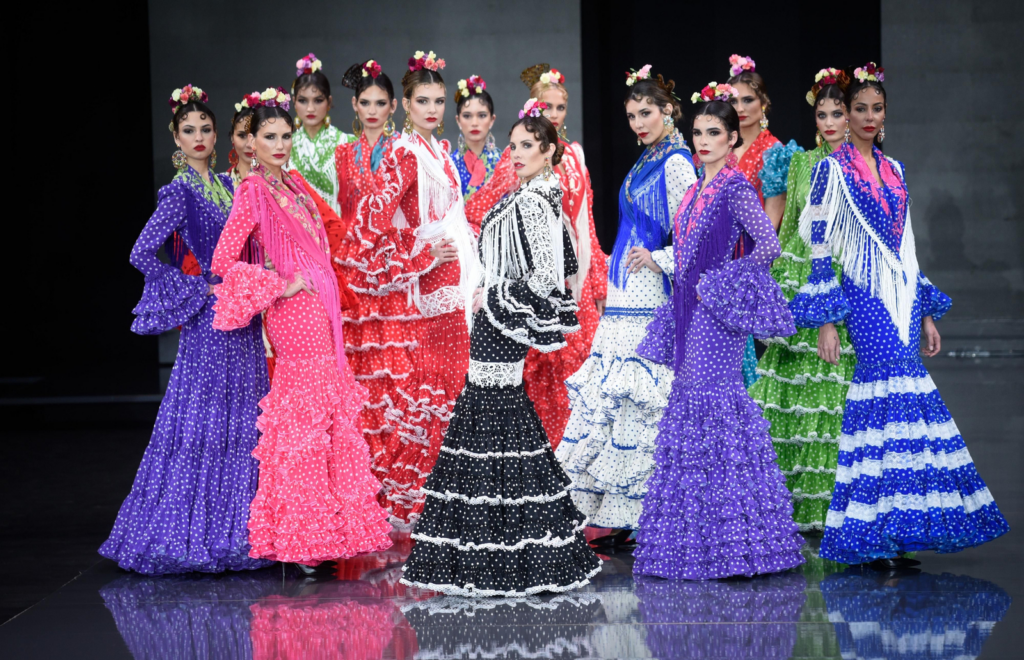
Dress code: During the day, women wear flamenco dresses (see our full article on this). Men wear traditional Andalusian dress or dark suits. In the evening, dress is more casual.
Tips: The Fair is a marathon, not a sprint. It starts at 2-3 in the afternoon and ends at dawn. Pace yourself. Eat well (the stalls serve typical Andalusian food). Drink water between rebujitos (chamomile tea with Sprite). Wear comfortable shoes.
Suma Flamenca (Madrid, May-June)
The Madrid flamenco festival, organized by the Community, is one of the most important in Spain.
What makes it special: Ambitious programming covering all styles of flamenco. It has a substantial budget that allows it to bring in the biggest international names.
Venues: Multiple venues in Madrid: Fernán Gómez Theater, Teatros del Canal, Conde Duque Cultural Center, including outdoor venues.
Programming: Approximately 40 shows over two months. From traditional recitals of cante jondo to contemporary dance-theater performances with flamenco roots.
Featured artists: In recent editions: Rocío Márquez, Antonio Canales, Mercedes Ruiz, Jesús Carmona, María Pagés.
Complementary activities: Lectures, screenings, photographic exhibitions on flamenco. The festival also includes educational activities for schoolchildren.
Tickets: €10-40 depending on the show. Discounted season tickets available.
Atmosphere: Madrid is not Andalusia, but it has a significant flamenco community (many Andalusians migrated to Madrid in the 1960s and 1970s). The festival attracts both purists and a wider audience interested in contemporary dance.
June: Andalusian heat and flamenco nights
Seville Flamenco Biennial (even years – 2026 if there is one)
The Biennial is the most prestigious flamenco festival in the world. It is held every two years (even years) in September, but the program is announced in June and the city already begins to buzz with anticipation.
We will discuss it in detail in September.
Córdoba Guitar Festival (first half of July, but preliminary events in June)
Córdoba dedicates a festival specifically to the guitar—classical, flamenco, and everything in between.
What makes it special: It focuses on the guitar as the protagonist. From pure flamenco guitar to fusions with other styles, from virtuoso soloists to chamber groups.
Main venue: Alcázar de los Reyes Cristianos – historic gardens and courtyards that create a magical atmosphere for evening concerts.
Program: Approximately 30 concerts. Flamenco guitar (Vicente Amigo and Dani de Morón have performed in previous editions), classical guitar, flamenco-jazz, world music featuring the guitar.
Atmosphere: Córdoba is hot in July, but concerts are held at night when it cools down. The patios of Córdoba (a UNESCO World Heritage Site) are at their most beautiful. Combine the festival with cultural tourism.
Tickets: €15-35. Some concerts in smaller venues are free.
July–August: Flamenco summer
Nerja Cave Festival (Málaga, mid-July)
A unique festival combining ballet, classical music, jazz, and flamenco in the spectacular setting of the Nerja Cave.
What makes it special: The setting. The cave has extraordinary natural acoustics and impressive geological formations. Outdoor concerts are held outside the cave, with the Mediterranean Sea in the background.
Flamenco: Although the festival includes other genres, there are always several nights dedicated to flamenco. Antonio Canales, Eva Yerbabuena, and Farruquito have performed.
Limited capacity: Capacity is limited (approximately 1,500 people). Reserve in advance.
Perfect combination: Beach + culture. Nerja is a charming coastal town. You can spend the day at the beach and enjoy world-class flamenco at night.
International Festival of Cante de las Minas (La Unión, Murcia, mid-August)
This is the most important festival-competition in the world of flamenco. It is the “world championship” of cante jondo.
What makes it special: It's a competition. Young artists from all over Spain (and beyond) compete in categories such as singing, dancing, and guitar playing. The prizes (Lámpara Minera in each category) are among the most prestigious that a flamenco artist can receive. Winning here launches careers.
History: It began in 1961. It has revealed talents such as José Mercé, El Pele, Estrella Morente, Miguel Poveda (all of whom won Lámparas when they were unknown young artists).
Format: Several nights of qualifying rounds where contestants showcase their artistry before a panel of expert judges. The finale is an exciting spectacle—tension, nerves, bursts of talent.
Venue: Parque Minero Theater-Auditorium. La Unión has a mining tradition, and the festival commemorates the miners who sang tarantas (mining songs) in the mines of Cartagena.
Atmosphere: Purist aficionados. People who come here know flamenco, detect every nuance, and cheer or remain silent depending on what they hear. It's a school for any aficionado.
Tickets: €20-50 depending on the night. The final is the most expensive and sells out quickly.
How to get there: La Unión is close to Cartagena (15 minutes). Murcia or Alicante airports are options. Consider staying in Cartagena (more options) and traveling there.
September: The Biennial
Seville Flamenco Biennial (throughout September, even-numbered years)
The Biennial is the most important flamenco event on the planet. It deserves detailed analysis.
History: Founded in 1980, the Biennial has presented the greatest living legends of flamenco and has been a launching pad for new voices.
Scale: For one month, Seville breathes only flamenco. More than 60 shows in various formats: large dance productions, intimate singing recitals, guitar concerts, experimental performances.
Main locations:
- Teatro de la Maestranza (Seville Opera House) – major productions
- Lope de Vega Theater – medium-sized shows
- Teatro Central – more experimental proposals
- Various venues: Royal Alcázar, Casa de la Memoria, Espacio Turina
Programming: The Biennial masterfully balances tradition and the avant-garde. In the same edition, you can see:
- A show by Sara Baras with a million-dollar production
- A recital of pure flamenco singing with veteran artists
- An experimental flamenco-hip hop collaboration
- Tributes to deceased teachers
Special events:
- Noche Blanca del Flamenco – a night when multiple venues in Seville host flamenco performances simultaneously, many of which are free of charge.
- Public master classes
- Photography exhibitions
- Documentary screenings
Artists: The Biennial attracts absolutely everyone. There is no flamenco artist who does not want to perform here. It is an honor and artistic validation.
Tickets: Wide range: from free shows to VIP seats costing €80-100 for blockbusters. Average: €25-50.
Planning: The full schedule is published in June. Tickets for the most popular shows sell out within days. Plan months in advance.
Accommodation: Seville is packed in September due to the Biennial. Book your hotel well in advance. Prices rise by 20-40% compared to the normal season.
Climate: September in Seville is still hot (25-30°C during the day, 18-22°C at night). Many shows are held outdoors, which is very pleasant with the evening breeze.
Advice from veterans:
- Purchase a season ticket if you plan to see several shows (significant discount).
- Don't try to see everything—it's impossible and exhausting. Choose strategically.
- Leave room for spontaneity. Some of the best moments happen at unscheduled events.
- Arrive early for shows at the Alcázar – the lines are long.
October: Flamenco Autumn
Huelva City Flamenco Festival (late October – early November)
Huelva, a province with a deep flamenco tradition (birthplace of the fandangos de Huelva), organizes a festival that often goes unnoticed but has an excellent program.
What makes it special: More intimate than large festivals. You can be just a few feet away from the artists. The proximity allows you to appreciate details that are impossible to see in large auditoriums.
Focus: Special attention to fandangos (the original style from Huelva) but not limited to them.
Venues: Gran Teatro, smaller venues in the historic center.
Prices: Very affordable, €10-25. It is an economically accessible festival.
November: Flamenco in autumn
Flamenco Comes from the South (Cadiz, November)
The province of Cádiz, which played a key role in the history of flamenco, organizes a festival spread across several municipalities.
What makes it special: It's not just one city, but a tour of the province. Jerez, Cádiz, San Fernando, Puerto de Santa María, Sanlúcar de Barrameda – each one hosts shows.
Advantage: You can discover multiple Flemish towns, each with its own character, while enjoying a high-quality program.
Logistics: Requires planning. You need a car or be willing to use buses/trains between cities.
Programming: A balance between singing, dancing, and guitar playing. Special attention is given to local artists from the province.
December: End of the flamenco year
Christmas Flamenco Festival (Madrid, late December)
Madrid closes the year with a Christmas festival that combines flamenco with festive spirit.
What makes it special: Family programming. Shows designed to introduce children and new audiences to flamenco.
Flamenco Christmas carols: An intriguing fusion of traditional Spanish Christmas carols with flamenco rhythms and styles.
Smaller but valuable festivals
In addition to the big ones, Spain has dozens of smaller festivals that deserve attention:
Alburquerque Flamenco Festival (Badajoz, August): In Extremadura, a region with a large gypsy community.
Flamenco Festival in Nîmes (France, January): Technically not in Spain, but so close to Catalonia and with such a good program that many Spanish fans attend. Nîmes has a large gypsy community (hence the term “Nîmes jeans” = denim).
Flamenco pa tós (Barcelona, various dates throughout the year): Series of concerts in Barcelona, a city with a large Andalusian community and its own flamenco scene.
Potaje Gitano de Utrera (Seville, June): A unique event that combines gastronomy (potaje = stew) with flamenco. A family atmosphere, very authentic.
Practical tips for enjoying flamenco festivals
Before the festival
Research the program: Read about the artists scheduled to perform. Knowing their style will help you choose what to see and better appreciate the performance.
Buy tickets in advance: The most popular shows sell out quickly. Official festival websites usually start selling tickets 1-3 months in advance.
Book your accommodation early: Cities fill up during major festivals. Prices and availability worsen as the date approaches.
Plan ahead but be flexible: Have a general idea of what you want to see, but leave room for spontaneous discoveries.
During the festival
Arrive early: Especially at small venues without assigned seating. The best seats fill up quickly.
Vístete apropiadamente:
- For outdoor festivals in summer: light clothing, but bring a jacket (nights get cool).
- For theaters: smart casual is appropriate.
- Comfortable shoes (you will be walking a lot)
Respect the silence: In flamenco, especially in cante jondo, there are moments of deep silence. Do not speak or make noise. Knowledgeable audiences remain completely silent during intimate moments and cheer at appropriate times.
Participate: If the atmosphere is participatory (in clubs, parties), don't be shy. Clap if you know how, cheer with “olé!” when something excites you, laugh, cry—flamenco invites emotional expression.
Stay hydrated and eat well: Festivals can be marathons. Take care of your body.
Interact with other fans: People at flamenco festivals are usually passionate and open. Strike up conversations, ask for recommendations, make friends.
After the show
Explore flamenco nightlife: In cities such as Seville, Jerez, and Granada, after the official shows, bars and clubs host live flamenco performances. Some of the best moments happen in these more informal settings.
Reflect and process: Flamenco can be emotionally intense. Give yourself time to process what you saw and felt.
Share experiences: On social media, with friends, write a journal. Articulating your experience deepens your appreciation.
Flamenco fan label
Attending flamenco festivals involves certain unwritten rules of etiquette:
Don't record long videos: It's generally prohibited and rude. Enjoy the moment. A quick photo is fine, but don't experience the concert through your screen.
Respect moments of silence: We already mentioned this, but it is crucial. In siguiriya, soleá, martinete – profound moments require respectful silence.
Applaud at appropriate moments: Between pieces, yes. During a piece, only if something extraordinary happens (a spectacular melisma, virtuoso footwork, a moment of obvious duende).
Do not leave during performances: It is disruptive. If you must leave, wait between pieces.
Respect the artists: Do not shout requests during the show. Afterwards, if there is a meet-and-greet with the artists, approach them respectfully.
Dress appropriately: You don't need to wear a flamenco dress (unless it's the Feria), but respect the atmosphere. Avoid flip-flops and beachwear in theaters.
Conclusion: Live flamenco is a transformative experience.
Flamenco festivals are much more than entertainment. They are a cultural ritual, a community celebration, the preservation of living tradition, and a space for artistic innovation, all rolled into one.
Seeing flamenco in Jerez during its festival, with the whole city vibrating to the beat; experiencing the Seville Biennial with the city transformed for a month; discovering young talent in La Unión competing with all their heart; feeling the emotion of cante jondo under the Andalusian stars—these experiences mark you, change you, connect you with something deeply human.
Flamenco is an art form that demands your complete presence. It is not background music; it is an immersive experience that invites you to feel without reserve. And at festivals, surrounded by hundreds of equally devoted people, that experience is multiplied.
In 2026, treat yourself to the experience of at least one flamenco festival. Whether you choose the grandeur of the Bienal, the authenticity of La Unión, the total immersion of the Festival de Jerez, or the intimacy of smaller festivals, I promise you it will be a trip you will remember for the rest of your life.
Attending a major festival is an experience that marks a turning point for any fan. To be prepared for these gala events, be sure to check out our Guide to Flamenco Dresses and Accessories, the definitive manual for wearing the appropriate attire with respect for tradition.
No responses yet