
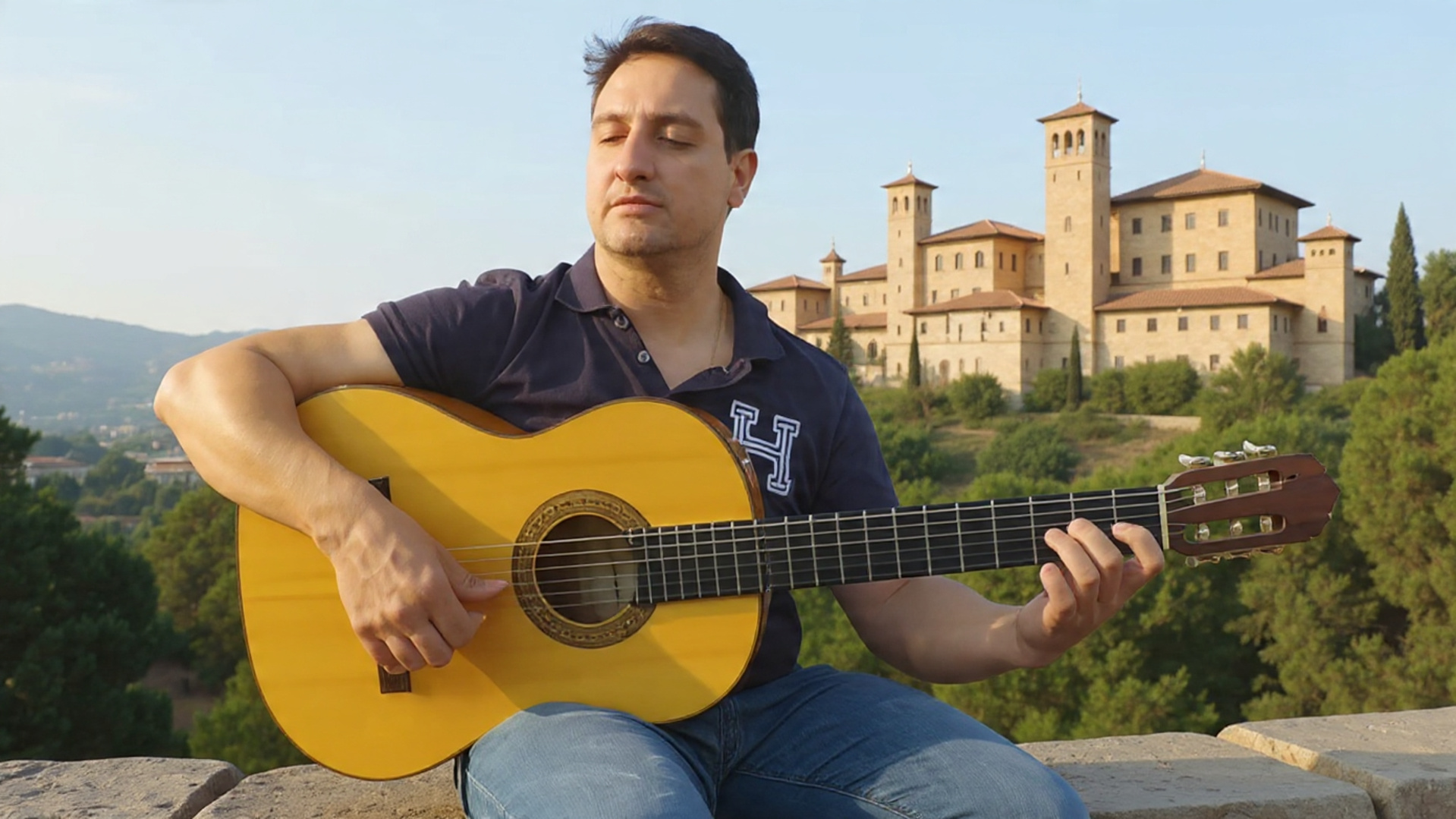
Flamenco is much more than music and dance; it is the soul of a people expressed through art. Declared Intangible Cultural Heritage of Humanity by UNESCO in 2010, flamenco represents centuries of history, cultural fusion, and unfiltered emotional expression. But where does flamenco really come from? How did it evolve from its humble origins to become one of the most recognized artistic genres in the world?
In this comprehensive guide to the history of flamenco, we will explore its multicultural roots, its development over the centuries, the legendary figures who shaped it, and its evolution into the contemporary flamenco we know today.
The origins of flamenco: a melting pot of cultures
It is practically impossible to determine the exact origin of flamenco, and therein lies part of its magic. Flamenco has no “inventor” or precise date of birth. It is the result of an extraordinary cultural fusion that developed over centuries in southern Spain, specifically in Andalusia.
The cultural roots of flamenco
The gypsy influence: Although flamenco is not exclusively gypsy, the contribution of the Romani people is fundamental and undeniable. The gypsies arrived in the Iberian Peninsula in the 15th century, coming from northern India. They brought with them their own musical traditions, instruments, rhythms, and a particular form of emotional expression that merged with the local music.
Historically marginalized and persecuted, the Romani people found in music a way to express their sorrows, joys, and experiences. Their contribution to flamenco includes the concept of “duende,” that intangible quality that transforms a technically correct performance into a transcendent and emotionally devastating experience.
The Andalusian substrate: For almost 800 years (711-1492), much of the Iberian Peninsula was under Muslim rule. Arabic music left a deep mark on what would eventually become flamenco. Melismas (vocal ornamentation), certain melodic modes, the use of Eastern scales, and the improvisation characteristic of singing have clear connections to the musical traditions of Arabia and North Africa.
Cante jondo, the purest and most profound form of flamenco, particularly reflects this influence with its mournful tones and modal structure reminiscent of the music of the Maghreb and the Middle East.
The Sephardic heritage: Sephardic Jews, who lived on the Iberian Peninsula until their expulsion in 1492, also contributed to the breeding ground of flamenco. Their liturgical songs, melodies, and tradition of oral transmission left their mark on the development of the genre.
Andalusian folklore: The popular songs and dances of Andalusia, many of which predate the arrival of the gypsies, form the foundation upon which flamenco was built. Fandangos, jaleos, seguidillas, and other styles have their roots in traditional Spanish music.
Latin American influences: On a round trip, the music that the Spanish brought to America returned transformed. On the way there, tango, guajira, and other flamenco styles show influences from Caribbean and Latin American rhythms that were incorporated into the flamenco repertoire in the 18th and 19th centuries.
Why Andalusia?
The concentration of flamenco in Andalusia is no coincidence. This region was the meeting point for all these cultures: gypsies settled mainly in the Guadalquivir valley, an Arab cultural heritage more deeply rooted than in the rest of Spain, a marginalized population that found a means of expression in music, and ports such as Cadiz and Seville that received influences from overseas.
Furthermore, the social structure of Andalusia, with its large estates and day laborers, created conditions where singing expressed the harshness of life and suffering, but also resilience and dignity in the face of adversity.
The prehistory of flamenco: from the 15th to the 18th century
Although we refer to this as “prehistory” because flamenco as we know it did not yet exist, this period is crucial to understanding its development.
15th-16th centuries: Seeds
Following the arrival of the Romani people in Spain in the 15th century and the Christian Reconquista that culminated in 1492, Andalusia became a melting pot where different cultural and musical traditions coexisted (not always peacefully). The Romani people, initially tolerated and later persecuted, developed their own musical forms that began to merge with popular Andalusian songs.
At that time, flamenco “palos” (styles) as we know them did not exist, but there were musical forms that would eventually evolve into flamenco: primitive tonás (songs without guitar accompaniment), martinetes (forge songs), and various forms of work songs.
17th century: Early forms
The first documented references that could be related to something similar to flamenco appear in the 17th century. Writers of the time mention dances and songs of gypsies in Andalusia, although without specifically calling them “flamenco.”
During this period, the guitar began to gain importance as an accompanying instrument. Until then, many songs were sung a cappella (without instrumental accompaniment) or accompanied by simple percussion.
18th century: Crystallization
During the 18th century, flamenco began to take on a recognizable form. The fundamental styles began to be defined with their own characteristics. The siguiriya, considered by many to be the oldest and purest style of singing, probably became established during this period.
Cities such as Jerez de la Frontera, Cádiz, Seville, and Triana (a gypsy neighborhood in Seville) became centers for the development of flamenco. Gypsy families developed dynasties where the art was passed down from parents to children orally, without sheet music or formal writing.
The use of the term “flamenco” to refer to this type of music also began to be documented in this century, although the exact origin of the term remains debated. Theories range from a deformation of “fellah mengu” (wandering peasant in Arabic) to references to flamingos (the birds) because of the haughty posture of the dancers, or even connections with Flemish soldiers who served in Spain.
The Golden Age of flamenco: the 19th century
The 19th century marks the official birth of flamenco as a recognized art form and the emergence of its first documented great figures.
First half of the 19th century: Flamenco emerges from the shadows
During the early decades of the 19th century, flamenco began to emerge from the forges, inns, and gypsy courtyards to reach a wider audience. Romantic European travelers visiting Spain, fascinated by the exotic and the oriental, “discovered” flamenco and began to write about it.
At this time, singing is still the dominant element. The guitar provides accompaniment, and dancing, although important, is subordinate to the voice. The songs are mostly “jondos” (deep): siguiriyas, soleares, tonás, martinetes. Flamenco continues to be mainly an art form of and for the marginalized.
1850-1910: The era of singing cafés
This is the true Golden Age of flamenco. The emergence of singing cafés completely revolutionized the genre. These establishments, which combined coffee, alcohol, and entertainment, proliferated especially in Seville, Cádiz, Jerez, and Madrid.
What were singing cafés?: Establishments where the public sat at tables, drank beverages, and enjoyed flamenco singing, guitar playing, and dancing performances. The first one for which there is solid evidence is the Café de los Lombardos in Seville (1847), although there were probably others before that.
Impact on flamenco: Singing cafés professionalized flamenco. For the first time, artists could make a living from their art. This led to:
- Technical refinement: Competition among artists and the demands of a paying audience dramatically raised the technical level.
- Development of festive styles: To keep the audience entertained, more cheerful and danceable styles were developed: alegrías, tangos, bulerías.
- The prominence of dance: The visual component gained importance. Dancers such as La Malena and La Macarrona became stars.
- Consolidation of the guitar: Flamenco guitar playing developed as an independent art form, not just as accompaniment.
The first legendary figures:
Silverio Franconetti (1831-1889): Considered by many to be the father of professional flamenco singing. Born to an Italian father and a Sevillian gypsy mother, Silverio was the first great flamenco impresario, opening his own café cantante in Seville. As a singer, he was a master of siguiriyas and soleares, establishing standards that endure to this day.
El Fillo (1820-1878): A gypsy singer from Puerto Real (Cadiz), he was one of the first to achieve legendary fame. He wrote lyrics that are still sung today, and his style of siguiriyas set a precedent.
La Andonda (1837–1914): One of the first female singers to achieve fame comparable to her male colleagues at a time when this was exceptional.
Paco el Barbero (1840-1910): A guitarist from Seville who elevated guitar playing to an art form in its own right, being one of the first to give solo guitar recitals.
Late 19th century: Geographic expansion
Flamenco spreads beyond Andalusia. Madrid becomes an important flamenco center, with singing cafés that rival those in Andalusia. The genre also reaches Barcelona, Valencia, and other Spanish cities.
Flamenco companies begin to tour internationally. Flamenco arrives in Paris, London, and other European capitals, where the bourgeois public consumes it as Spanish exoticism.
The period of flamenco opera: 1910–1955
At the beginning of the 20th century, flamenco underwent a controversial transformation that divided (and continues to divide) purists.
The birth of flamenco opera
With the decline of singing cafés, flamenco moved to larger theaters. This gave rise to “flamenco opera” or “Andalusian opera” shows, theatrical productions with elements of comedy, elaborate sets, large flamenco scenes, and a more commercial orientation.
Characteristics:
- Long shows with multiple artists
- Incorporation of less “jondo” and more festive sticks
- Comic and theatrical elements
- More elaborate and stylish costumes
- Large audiences in big theaters
The controversy: Purists criticized flamenco opera for “prostituting” genuine art, sacrificing depth for entertainment. They argued that duende and authenticity were lost in favor of spectacle.
However, flamenco opera also had positive effects:
- He popularized flamenco among social classes that were previously unfamiliar with it.
- It enabled many artists to earn a good living.
- He developed technical aspects of dance and playing
- He preserved the genre at a time when it could have disappeared.
Prominent figures of the era
La Niña de los Peines (1890-1969): Pastora Pavón, nicknamed La Niña de los Peines (The Girl with the Combs), is considered by many to be the greatest flamenco singer in history. Her repertoire covered all styles, but she was especially masterful in soleares and siguiriyas. She recorded hundreds of albums that are now invaluable historical documents.
Manuel Torre (1878-1933): Gypsy singer from Jerez, considered the epitome of pure cante jondo. His voice and expression were so intense that it was said he “sang with blood.” He recorded very little, but his influence on later generations was immense.
Antonio Chacón (1869-1929): A non-Gypsy singer from Jerez who brought flamenco singing to technical perfection. A master of fandangos and malagueñas, his more “melodic” style influenced the development of flamenco singing.
Ramón Montoya (1879-1949): He revolutionized flamenco guitar, being the first to give solo guitar recitals in major theaters. He introduced harmonies and techniques that expanded the musical language of guitar playing.
Carmen Amaya (1913-1963): Born in Barcelona to a gypsy family, she was the most internationally renowned dancer of her time. Her footwork technique rivalled that of the men (something revolutionary), and her energy was explosive. She performed on Broadway, in Hollywood, and for heads of state, bringing flamenco to massive international audiences.
The 1922 Cante Jondo competition
This event, organized in Granada by the poet Federico García Lorca and the composer Manuel de Falla, sought to rescue and preserve the “pure” forms of cante jondo that they considered threatened by commercialization.
Although the contest itself had limited impact (it even lost money), it symbolized the beginning of a movement to reevaluate flamenco as a serious art form worthy of academic study, not just popular entertainment.
The Flemish Renaissance: 1955–1980
After the Spanish Civil War (1936-1939) and the post-war years, flamenco experienced a period of stagnation. But in the mid-1950s, a spectacular revival began.
The Festival of Cante Jondo in Córdoba (1956)
This festival, which continues to be held, marked a turning point. It brought together the great living figures of flamenco and attracted national and international attention. It showed that there was an audience eager for authentic flamenco, not just commercial spectacle.
The Silver Age: the postwar masters
Antonio Mairena (1909-1983): A singer from Mairena del Alcor, he became the greatest defender of flamenco purism. His revival of almost forgotten ancient songs, his theoretical work on flamenco, and his teaching influenced several generations.
Camarón de la Isla (1950-1992): Although his career took off in the 1970s, he deserves special mention for being possibly the most influential flamenco singer of the 20th century. José Monge Cruz, born in San Fernando (Cádiz), had a unique voice and a captivating charm. His collaboration with guitarist Paco de Lucía revolutionized flamenco, incorporating elements of jazz, rock, and Brazilian music without losing the essence of flamenco. Albums such as La Leyenda del Tiempo (1979) were controversial but opened doors that transformed the genre.
Paco de Lucía (1947-2014): Francisco Sánchez Gómez, from Algeciras, took flamenco guitar into uncharted territory. A technical virtuoso, he incorporated exotic scales, jazz harmonies, and Latin rhythms, creating a personal style that influenced guitarists around the world. His instrumental album Fuente y Caudal (1973) proved that flamenco guitar could function as an art form independent of singing.
Antonio Gades (1936-2004): Dancer and choreographer who brought flamenco dancing to theater stages around the world. His productions “Bodas de Sangre,” “Carmen,” and “El Amor Brujo” fused flamenco with contemporary dance, reaching audiences who had never seen traditional flamenco before.
The institutionalization of flamenco
During this period, flamenco began to be the subject of serious academic study. University chairs were created, rigorous books on its history and technique were published, and the first formal flamenco schools were established.
Flamenco clubs (cultural associations dedicated to flamenco) proliferated throughout Spain, creating spaces where amateurs and professionals could meet to preserve and practice the art.
Contemporary flamenco: 1980–present
The last few decades have seen flamenco evolve in multiple directions, maintaining constant tension between tradition and innovation.
New flamenco and fusion
The 1980s and 1990s saw the emergence of “new flamenco,” a term that encompasses multiple fusion styles:
Pata Negra: Brothers Amador and Rafael fused flamenco with blues and rock, creating a unique sound that influenced an entire generation.
Ketama: A group formed by members of gypsy flamenco dynasties, they mixed flamenco with pop, salsa, African, and Brazilian music. Their commercial success proved that it was possible to innovate without losing authenticity.
Diego El Cigala: A flamenco singer who has collaborated with jazz, Cuban music, and tango artists, expanding flamenco to new audiences without diluting its essence.
Niña Pastori: A singer who has managed to keep one foot in tradition while incorporating contemporary elements, achieving great commercial success and the respect of purists.
The dance revolution: the new masters
Joaquín Cortés: A dancer who brought flamenco to massive stadiums with big-budget productions that combined flamenco, contemporary dance, and spectacular theatrical elements.
Israel Galván: The son of legendary dancers, he has radically deconstructed flamenco dance, incorporating elements of Japanese butoh dance, experimental music, and avant-garde concepts. Opinions are divided, but no one doubts his impact.
Sara Baras: Dancer and choreographer who has taken female flamenco dancing to extraordinary technical heights, creating shows that fill theaters around the world.
Rocío Molina: Probably the most innovative dancer of her generation, she constantly breaks the rules of traditional flamenco by exploring territories where dance, performance art, and ritual merge.
Flamenco in the 21st century
Today's flamenco is incredibly diverse:
Purists: Artists who keep traditional forms alive. Singers such as Miguel Poveda, David Palomar, and Arcángel, and guitarists such as Cañizares and Niño Josele deeply respect tradition while contributing their own personal touch.
Innovators: Artists who take flamenco into uncharted territory. Rosalía has been particularly controversial, fusing flamenco with reggaeton, trap, and electronic music, reaching massive global audiences but sparking debate about what constitutes “authentic flamenco.”
Flamenco academics: The genre is now the subject of rigorous study in conservatories and universities. This has improved technical training, but some argue that it can take away spontaneity.
Global flamenco: Artists from around the world (Japan, the United States, France) are not only learning flamenco but also creating their own expressions, raising fascinating questions about cultural appropriation versus appreciation.
Flamenco as World Heritage
In 2010, UNESCO declared flamenco an Intangible Cultural Heritage of Humanity. This recognition was not merely honorary; it acknowledged that:
- Flamenco represents a living tradition that has been passed down from generation to generation for centuries.
- Embody values of respect for cultural diversity and human creativity
- It is at risk of being lost without protection and active promotion.
- It has universal value that transcends its specific geographical origin.
This recognition has promoted preservation policies, facilitated funding for research and teaching, and raised the prestige of flamenco globally.
Flamenco styles: the flamenco family
Throughout its history, flamenco has developed dozens of “palos” (styles) classified by rhythm, mode, geographical origin, and function. Understanding the main ones helps to appreciate the richness of the genre:
Basic songs or matrices
Tonás: The oldest songs, without guitar accompaniment. They include martinetes (forge songs), deblas, and carceleras. They are deeply expressive and considered the purest form.
Siguiriya: The deepest and most solemn style of singing, associated with tragedy, death, and existential pain. Its 12-beat rhythm is complex. It is the quintessential “grand song.”
Soleá: Considered the “mother of songs,” the soleá allows the artist to display their full range of expression. Its name comes from “soledad” (loneliness), and it deals with themes of lost love, deep sorrow, and philosophical reflection.
Songs of departure and return
Forms that traveled to America and returned transformed:
Guajira: From Cuba, with a habanera rhythm. Milonga: Argentine influence. Colombian: Caribbean rhythms. Flamenco rumba: Although sometimes scorned by purists, it is immensely popular.
Festive songs
Alegrías: From Cádiz, bright and celebratory. Bulerías: Fast, festive, the typical ending to any flamenco party. They allow for a lot of improvisation. Tangos: Not to be confused with Argentine tango. Flamenco tangos are rhythmic and allow for great interaction between the singer, guitarist, and dancer.
Regional songs
Malagueñas: From Malaga, melodic and without a fixed beat. Granaínas: From Granada, similar to malagueñas. Fandangos: With local variations from Huelva, Lucena, etc.
Flamenco in today's world
Today, flamenco is a global phenomenon:
Flamenco schools: They exist in Tokyo, New York, London, and Buenos Aires. Students of all nationalities devote years to mastering this Spanish art form.
International festivals: The Festival de Jerez, the Bienal de Sevilla, the Festival de Cante de las Minas in La Unión, and dozens more attract fans from all over the world.
Global fusion: Flamenco has fused with virtually every genre imaginable: jazz (Miles Davis recorded “Sketches of Spain” inspired by flamenco), rock, electronic, hip-hop, Indian classical music, contemporary Arabic music.
Job market: Thousands of people make a living from flamenco as dancers, singers, guitarists, teachers, researchers, producers, specialized sound technicians, instrument makers, and costume designers.
Flamenco tourism: Flamenco is one of Spain's main cultural attractions, generating millions of euros annually in tourism.
Conclusion: A living art form in constant evolution
The history of flamenco is the history of an art form that was born on the margins of society, forged in suffering and resistance, professionalized without losing its soul, and globalized while maintaining its roots.
It is an art form that has survived persecution, wars, extreme commercialization, and radical cultural changes. It has gone from gypsy forges to the stages of the Paris Opera. From being entertainment for the poor to World Heritage.
The most remarkable thing about flamenco is that it remains alive, evolving, generating passionate debate between purists and innovators. Each generation contributes its own voice while respecting (or challenging) the tradition it has inherited.
The flamenco of the future will undoubtedly be different from today's flamenco, just as today's flamenco differs from that of the singing cafés of the 19th century. But if it maintains that ability to express the deepest emotional truth of human beings, if it continues to convey that duende that makes your skin tingle, then it will remain authentic flamenco, regardless of the forms it takes.
Because ultimately, flamenco is not a set of technical rules or a repertoire frozen in time. It is a way of understanding and expressing life: with passion, with truth, without filters. It is the ability to transform pain into beauty, joy into shared celebration, and the most ordinary human experience into extraordinary art.
Understanding history is the only way to appreciate the present of this universal art form. If this journey through time has sparked your curiosity about the physical places where that history continues to thrive every night, be sure to read our guide on the Flamenco Clubs: The Temples of Authentic Flamenco.
No responses yet