
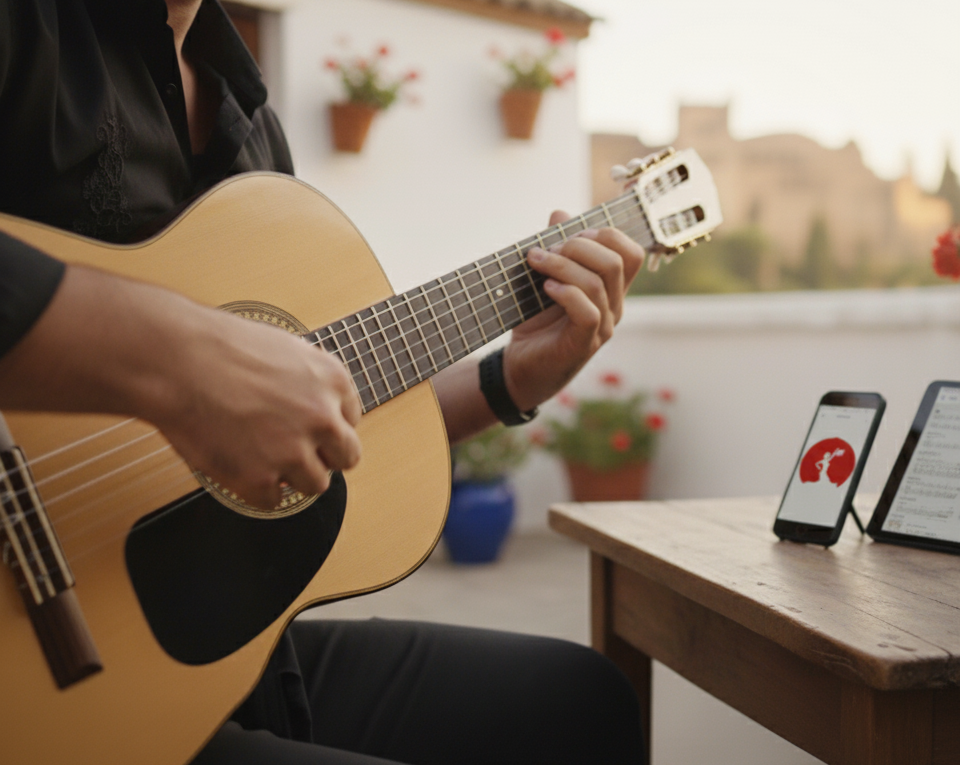
When we think of flamenco, the image that almost always comes to mind is the Spanish guitar. And although this instrument is certainly fundamental to the genre, flamenco uses and has incorporated throughout its history a variety of instruments that enrich its sound and expand its expressive possibilities.
In this comprehensive guide to flamenco instruments for 2026, we explore not only the flamenco guitar in depth, but also the cajón, handclapping, singing as an instrument in itself, and other sonic elements that make up the flamenco musical universe. You'll discover the history of each instrument, its technical characteristics, how to play it, what makes it unique, where to buy it, and how it has evolved from the origins of flamenco to contemporary fusions.
The human voice: the first and most important instrument
Although not technically an "instrument" in the traditional sense, the human voice is the absolute heart of flamenco. The singing historically precedes any instrumental accompaniment.
Singing as the perfect instrument
Unique characteristics of the flamenco voice:
Wide vocal range: Good flamenco singers can cover two octaves or more, moving from deep lows to piercing highs, often within the same phrase.
Melismatic ornamentation: Flamenco makes extensive use of melismas (multiple notes on a single syllable). A flamenco singer can turn a two-syllable word into a ten-second phrase with dozens of different notes.
Intense Vibrato: Flamenco vibrato is more pronounced and expressive than in classical music. It is not a uniform tremolo but an emotional undulation.
Quejío: Expressive moans that communicate pain, passion, ecstasy. They are not words, but they say more than a thousand words. The authentic quejío comes from the soul; it cannot be faked.
Use of falsetto: Both men and women use falsetto strategically for dramatic effect. In flamenco, falsetto is not a weakness but a powerful expressive tool.
Controlled breathing: Phrases that seem endless without taking a breath. The breath control of great flamenco singers like Camarón or La Niña de los Peines was astonishing – phrases of 20-30 seconds without taking a breath.
Specific vocal techniques of flamenco
Emission from the diaphragm: Unlike lyrical singing which seeks nasal placement, flamenco singing comes from the diaphragm, giving it visceral power.
Rasgado: A technique that creates a rough, "broken" texture in the voice. It's not a defect; it's a deliberate aesthetic choice. Manuel Torre had a raspy voice that was his signature.
Modal tuning: Flamenco uses modes (primarily Phrygian) not Western major/minor scales. This produces tunings that may sound "out of tune" to untrained ears but are perfectly intentional.
Pellizco: That indefinable "something" that makes a note give you goosebumps. It's not a technique you can learn; it's genuine emotional expression that comes through the voice.
Care of the flamenco voice
Professional flamenco singers take obsessive care of their voices:
- Stay hydrated: Water, water, water. Avoid caffeine and alcohol before singing.
- Vocal rest: After intense performances, days of almost total silence.
- Avoid tobacco: Although historically many flamenco singers smoked, today it is known that it destroys the voice.
- Warm-up: Voice warm-up before singing loudly. Never start directly with siguiriya.
- Humid environment: In dry climates, humidifiers help keep vocal cords hydrated.
The flamenco guitar: queen of instruments
The Spanish guitar is synonymous with flamenco, but the flamenco guitar has characteristics that distinguish it from the classical guitar.
Anatomy of the flamenco guitar
Construction:
Back and sides wood: Traditionally Spanish cypress. Some concert guitars use rosewood, but cypress is more typically flamenco. Cypress produces a brighter, more percussive sound with less sustain (the notes don't resonate as long).
Soundboard: German spruce or Sitka spruce. The soundboard is the most important element acoustically. It should be thin (more so than on a classical guitar) to respond quickly.
Neck: Cedar, with an ebony or rosewood fingerboard. Slightly thinner than a classical guitar for faster playing.
Low action: The strings are closer to the fretboard than on a classical guitar. This allows for speed but requires precise technique to avoid fret buzz (strings touching the frets).
Golpeador: Transparent protective plate on the lid, essential because the "golpe" (hitting the lid with knuckles) is an integral technique of flamenco.
Tuning Machines: Traditionally made of wood (screw mechanism). Modern guitars sometimes use machine tuning machines.
Acoustic differences with classical guitar:
- Brighter and more aggressive sound: Less warm, more percussive
- Less sustain: Notes decay faster (useful in fast passages where excessive sustain muddies the sound)
- Greater media exposure: Corta in the mix, clearly audible accompanying singing
- Quick response: The cover responds instantly to the attack.
Right-hand techniques
The right hand of the flamenco guitarist performs techniques specific to the genre:
Strumming: Striking the strings with the fingers (usually ring, middle, and index fingers down, thumb up) to create a percussive chord. There are dozens of strumming patterns, each with its own name.
Alzapúa: A thumb technique that combines thumb strumming on the bass strings with thumb picking on the treble strings. It produces complex rhythms with one hand.
Picado: Fast scale played with alternating index-middle or middle-ring fingers. Flamenco picado requires crystal clarity at extremely high speeds.
Tremolo: A repetitive pattern (usually thumb on bass strings, ring finger-middle finger-index finger-middle finger-ring finger on treble strings) that creates a sustained note effect. Flamenco tremolo is slightly different from classical tremolo in terms of speed and accentuation.
Strum: Strike the top of the guitar with your ring finger (usually) between the bridge and the pickguard. This produces a percussive sound that accentuates the beat.
Muted thumb: Technique where the thumb touches the bass string but immediately mutes it with the palm, producing a percussive rather than melodic sound.
Left-handed techniques
Capos (barres): Essential in flamenco. Many falsetas require capos in high positions on the neck.
Ligados: Hammer-ons and pull-offs played forcefully so that they sound clearly without the involvement of the right hand.
Selective muting: Mute specific strings while others ring out, creating complex rhythmic textures.
Vibrato: Oscillation of the note with wrist movement. Flamenco vibrato tends to be broader and more expressive than classical vibrato.
Buying a flamenco guitar: a practical guide
Price ranges and what to expect:
Student (€200-600): Industrially manufactured guitars. Basic quality laminated or solid wood. Suitable for learning but limited in sound. Brands: Alhambra basic series, Admira, Prudencio Sáez student.
Intermediate (€600-1,500): Workshop guitars made from solid wood. These begin to have a real “flamenco sound.” Suitable for serious students and semi-professionals. Brands: Alhambra series 9-10, Raimundo, Hermanos Camps.
Professional (€1,500–5,000): High-quality luthier or factory-made guitars. Excellent sound, projection, and response. Brands/luthiers: Conde Hermanos, Vicente Carrillo, Gerundino Fernández, Manuel Reyes Jr.
High-end (€5,000+): Instruments by master luthiers, often made to order. Select woods, entirely handcrafted. Luthiers: Antonio Morales, José Marvi, Manuel Contreras II, Hermanos Bellido.
Shopping tips:
- Try it out for yourself if you can: Every guitar is unique. Two guitars of the same model may sound different.
- Seek tonal balance: All strings (low, middle, high) should have similar volume.
- Check the action: It should feel comfortable in your hand. Very low action is fretchy; very high action is tiring.
- Inspect construction: Clean joints, level frets, smooth-running tuning pegs.
- Question about wood: Ideally, Mediterranean cypress (Spain, Morocco). German spruce top.
- Warranty and service: Purchase from a reputable dealer that offers warranty and after-sales service.
Maintenance of the flamenco guitar
Basic care:
- Controlled humidity: 45-55% relative humidity. If it is too dry, the wood will crack. If it is too humid, the neck will warp.
- Stable temperature: Avoid sudden changes. Do not leave in a car in direct sunlight.
- Cleaning: Clean strings and fingerboard after playing. Apply lemon oil to fingerboard (ebony) every 6 months.
- String replacement: Every 1-3 months depending on use. Old strings lose their shine and tuning.
- Annual adjustment: A luthier should check the following annually: action, frets, tuning pegs, bridge.
Flamenco strings:
Flamenco guitar strings are made of nylon (treble) and metal-coated nylon (bass), like classical guitar strings, but with specific tensions.
Tension: Flamenco players generally prefer medium-high or high tension strings. They provide greater projection and response, although they require more finger strength.
Popular brands: Savarez (especially the Cantiga line), Hannabach (specifically for flamenco), D'Addario Pro-Arte, Augustine (regals).
Experimentation: Every guitarist finds their ideal strings. Some mix and match (treble strings from one brand, bass strings from another). Try different ones until you find your combination.
The flamenco cajón: percussion that revolutionized the genre
The cajón is relatively new to flamenco (introduced in the 1970s) but has already become indispensable.
History of the cajón in flamenco
Peruvian origin: The cajón is an Afro-Peruvian instrument that has been used in Creole and Afro-Peruvian music since the 19th century. African slaves in Peru, without access to drums, created percussion instruments using wooden boxes.
Discovery by Paco de Lucía: In 1977, Paco de Lucía visited Peru and discovered the cajón. He was fascinated by how well it fit with flamenco rhythms. He brought cajones back to Spain and began incorporating them into his performances.
Rapid adoption: The flamenco community embraced the cajón immediately. It provided a deep rhythmic foundation without being as intrusive as a full drum kit. Within a decade, the cajón was ubiquitous in flamenco.
Evolution: Spanish manufacturers adapted the Peruvian cajón to flamenco needs: they added internal bass strings (guitar strings or cajón bass strings that vibrate against the top), refined dimensions to optimize sound.
Anatomy of the flamenco cajón
Construction:
- Box: Plywood (usually birch) 12-15mm thick. Typical dimensions: 48cm high x 30cm wide x 30cm deep.
- Top (front): Thinner wood (3-5mm), the surface that is struck. It can be birch, beech, or exotic woods.
- Snare wires: Guitar strings or metal coils stretched across the inner head. They vibrate when you strike the head, creating a snare drum effect.
- String adjustment: Systems for tightening/loosening strings, changing the sound.
- Rear hole: For sound projection (functions as a guitar hole).
Basic sounds:
- Grave (low): Strike with the palm in the center of the lid. Produces a deep, round sound.
- Slap: Strike with fingers on upper edge. Strings vibrate, creating a sharp, bright sound.
- Mid-range tones: Combinations, strikes in different areas, with different parts of the hand.
Flamenco cajón technique
Position: Sit on top of the box, leaning slightly forward. Hold the lid between your knees/thighs to keep your hands free.
Hand techniques:
- Bass stroke: Palm of the hand, fingers together, strike in the center. The impact should be quick (do not press after the stroke).
- Slap: Fingers (usually 4 fingers together), sharp blow on the upper corner, allowing the fingers to bounce back immediately.
- Ghost notes: Very soft strokes that create rhythmic texture without full volume.
- Flams: Two almost simultaneous strokes (one hand slightly ahead of the other).
Rhythmic patterns: Each flamenco style has its own characteristic patterns. The cajon player must be familiar with the rhythms of bulería (12 beats), soleá (12), tangos (4), alegrías (12), etc.
Interaction with others: The cajón is not a solo instrument; it provides accompaniment. It must interact with the guitar, respond to the singing, and support the dancing without being intrusive.
Buying a drawer: a practical guide
Price ranges:
- Affordable (€50-150): Basic cajons, sometimes without bass drums or with low-quality bass drums. Suitable for beginners who are unsure whether they will continue playing.
- Mid-range (€150-400): Good quality, decent bass drums, balanced sound. Brands: Meinl (Artisan line), Schlagwerk, LP (Latin Percussion).
- Professional (€400-800+): Handcrafted or semi-handcrafted construction, selected woods, premium strings. Brands: Katho, Cajón Flamenco Bellota, Hijos de Valeriano Carmona.
What to look for:
- Distinct sounds: Deep bass and bright treble that are clearly differentiated.
- Adjustable straps: The ability to modify tension increases versatility.
- Solid construction: Well-glued joints, wood without cracks.
- Comfort: Height and size appropriate for your body.
- Try it out: If possible, try out several models. The drawer should “speak” to you.
Accessories:
- Case: Protection for transport.
- Tuning techniques: Allen key (for adjusting bass strings on some models).
The palms: the oldest instrument
Clapping (rhythmic clapping) is a fundamental instrument in flamenco, even predating the guitar.
Types of palms
Muffled clapping: Clapping with a muffled, deep sound. Performed with cupped hands, clapping palm against palm but with fingers apart, creating an air chamber. Sound: “pom pom pom.”
Dry (or clear) claps: Claps with a bright, sharp sound. They are performed with flat hands, fingers together, striking palm against palm with force. Sound: “clap clap clap.”
Strategic use: Different combinations are used in each style and moment. For example, in bulería, the dance section may use muffled clapping for a deep base, while siguiriya uses sharp clapping at specific moments for accentuation.
Clapping technique
It seems simple, but clapping well is an art:
Endurance: Clapping for 3-4 minutes straight (the length of a bulería dance) requires endurance. Your hands will hurt, turn red, and may blister if you are not used to it.
Rhythmic precision: The clapping sets the beat. Imprecision ruins the rhythm. Professional clappers have impeccable timing.
Dynamics: Not all beats have the same volume. Accents at specific points in the beat create the flamenco swing.
Group coordination: When several people clap, they must be perfectly synchronized. Any misalignment sounds chaotic.
The role of the palm tree grower
In professional shows, especially dance shows, there are “clappers”—people whose job is to clap.
Responsibilities:
- Mark the beat clearly so that the dancer does not lose their place.
- Create a rhythmic foundation upon which the guitarist and singer can build.
- Vary between dull and dry claps depending on the moment
- Sometimes chanting cheers (“¡olé!” “¡eso es!”) or even singing short songs
Great palmeros: Although they are not as famous as guitarists or singers, there are legendary palmeros. El Bobote and Pulga are respected names in the world of flamenco.
Other instruments in flamenco
Although guitar, vocals, cajón, and handclapping are at its core, flamenco has incorporated other instruments.
Traditional instruments
Castanets: Small pieces of wood that are played with the fingers, producing a clicking sound. More common in Spanish folk dancing than in pure flamenco, but some dancers use them in alegrías or sevillanas.
Pitos (finger snaps): Percussive sound made by snapping fingers (usually thumb against middle finger). Used in bulerías and tangos.
Zapateado: Although they are the dancer's feet, they function as a percussion instrument. Good dancers can create complex rhythms with just zapateado.
Modern fusion instruments
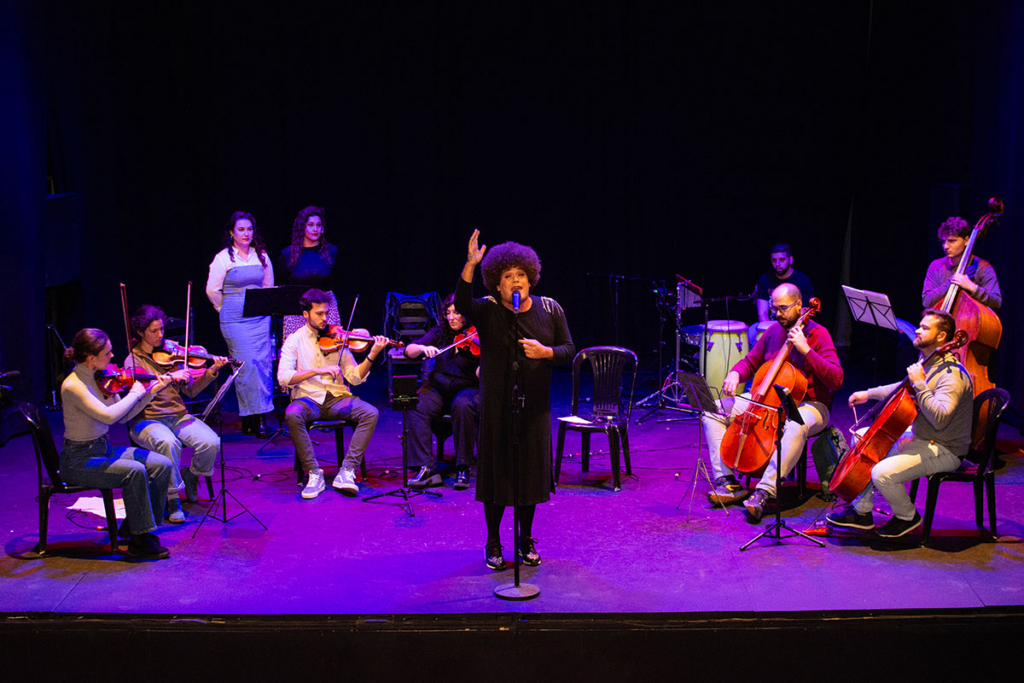
Double bass: In flamenco-jazz, the double bass provides bass lines that enrich the harmony. Paco de Lucía used a double bass in his sextet.
Drums: In rock-flamenco or nuevo flamenco fusions. They should be played with sensitivity to the flamenco rhythm (which is not standard 4/4).
Flute: Both transverse flute and Arabic flute (ney). Jorge Pardo, a jazz flutist, collaborated extensively with Paco de Lucía, demonstrating that the flute can dialogue beautifully with flamenco.
Piano: Although not very traditional, pianists such as Chano Domínguez have shown that the piano can play authentic flamenco. It requires adapting techniques to perform rasgueos (percussively struck chords) and tremolo on the keyboard.
Violin: It is rare in classical flamenco, but some fusions incorporate it. British violinist Nigel Kennedy has a flamenco-classical project.
Saxophone: In flamenco-jazz. Jorge Pardo also plays the soprano saxophone. The challenge is to respect the Phrygian mode and the rhythm.
Latin percussion: Congas, bongos, timbales. In flamenco-Latin fusions. They must be played respecting the flamenco rhythm, without imposing Latin clave.
Electric bass: In nuevo flamenco. Carles Benavent revolutionized the bass in flamenco, creating lines that respected the rhythm but added a contemporary groove.
Electronic instruments and effects
Electric guitar with effects: Some guitarists (Tomatito occasionally, Vicente Amigo on certain tracks) use flamenco guitars with pickups and subtle effects (reverb, delay). These should be used sparingly so as not to distort the sound.
Loops and samplers: Experimental artists such as Niño de Elche use loopers to create layers of singing, guitar, and handclaps recorded in real time and then played back.
Synthesizers: In electronic fusions. Rosalía used synthesizers in El Mal Querer. The key is that they serve flamenco expression, not dilute it.
The importance of silence as a “tool”
In flamenco, silence is as important as sound.
Dramatic silences: In cante jondo, singers may end a phrase and leave several seconds of absolute silence before continuing. This silence is charged with emotional tension.
Pauses: Moments when all instruments stop simultaneously. When they resume (usually with a strong accent), the effect is explosive.
Breathing space: The spaces between phrases allow the listener (and the artist) to breathe, to process what they have heard emotionally.
Contrast: Silence makes the subsequent sound more impactful. After deep silence, a scream or guitar riff has a multiplied impact.
Conclusion: the flamenco orchestra
Flamenco can be minimalist (a solo singer, a palo seco) or it can be a rich combination of multiple instruments. But regardless of the configuration, each element must serve the genuine emotional expression that is the soul of flamenco.
Instruments are not ends in themselves; they are vehicles for conveying duende, rhythm, and feeling. A guitarist with perfect technique but no soul is not flamenco. A cajon player who keeps impeccable rhythm but does not dialogue with the singer does not understand flamenco.
The beauty of flamenco lies in how these instruments—the human voice, guitar, cajón, handclaps, and any others that may be incorporated—intertwine in conversation. It is not music where one person plays their part and the others wait their turn. It is constant dialogue, responses, provocations, mutual support.
Although percussion and handclapping give body to the sound, the soul of flamenco will always vibrate between six strings. To understand how these instruments merge on stage, we invite you to explore our The Complete Guide to Arts and Entertainment in 2026, where you can see this instrumentation performed live.
No responses yet